Twelve years of taking complex things and making them obvious.
Staff-level product designer inside the enterprise. Product builder outside it. I design systems for retail giants by day and ship my own AI tools by night — and I think those are the same job.
Scroll — the story starts in 2014
CH.01 — THE THREAD
Every role, the same problem in a different costume.
I started in 2014, before “design systems” was a job description. Across startups, healthtech, B2B SaaS, and one of the region’s largest retail groups, the brief has never really changed: something is too complex, and people have to use it anyway.
2014 — 2018
The foundations
Future Beyond and Neplar Corei — WordPress builds, then front-end development and senior UI design. I learned design and code as one job before the industry decided they were two.
DESIGN-TO-CODE FROM DAY ONE
2018 — 2021
The craft years
Three years at Protopillar: end-to-end interfaces, journey maps, personas built from primary research, and analytics-driven iteration. The unglamorous reps that make judgment fast later.
2021 — 2024
The proving ground
A rapid sequence — Vivoiz Healthtech, a design system from scratch on contract at AI Enterprise, a UX audit of a major property platform at CX100 that surfaced 30+ critical gaps, then independent consulting. Different domains, same brief: something is too complex, and people have to use it anyway.
+60% ENGAGEMENT · +70% SATISFACTION · SYSTEMS FROM SCRATCH
2024
Principal, proven
Principal Product Designer at Seanergy Digital. A research-led redesign of core product interfaces — moderated and unmoderated testing cycles, synthesized into changes the engineering team actually shipped.
+60% ENGAGEMENT · +70% SATISFACTION · ONE QUARTER
2025 — NOW
The system at scale
Staff Product Designer & Design Lead at Alshaya Group. I own design strategy for a multi-brand retail platform ecosystem — and architected the design system that holds it together: 200+ standardized components across 6+ product surfaces. First product shipped within 3 months of joining; adoption rose 35%.
200+ COMPONENTS · 6+ SURFACES · +35% ADOPTION
The enterprise taught me systems. But systems thinking has a side effect: eventually you want to build the whole thing yourself.
CH.02 — THE ITCH
So I started shipping my own.
Designing inside the enterprise means handing your thinking to someone else to build. I wanted the other half of the job — the architecture, the data model, the deploy. Since 2025 I’ve been building products end-to-end: design, code, infra, launch. Some shipped. One didn’t. All of it is the point.
SHIPPED · 2025
PrismKit
AI DESIGN AUDIT TOOL · DESIGN, CODE, LAUNCH
An AI design audit tool built on an agentic architecture in 2025 — before agents were a recognized category. Point it at a screen and an agent walks it the way a reviewer would: a structured critique of hierarchy, consistency, and accessibility. Launched on Product Hunt in August 2025.
AGENT-DRIVEN BEFORE IT WAS A CATEGORY · PRODUCT HUNT · AUG 2025
A predictive product intelligence platform: real user behavior turned into conversion improvements, smarter experiments, and forecasted outcomes. The most advanced thing I've built — aimed at a niche the big analytics suites fly over, and in active refinement toward it.
LIVE · PREDICTIVE INTELLIGENCE · ACTIVE REFINEMENT
THECRIT.TOOLS · NEXT.JS 16 · SUPABASE · ANTHROPIC API
Walk into critique armored. Crit prepares product designers for critique sessions: upload your work, get a structured four-section report before anyone else sees it. Auth, schema, and workspace architecture are live; the critique engine is in active build.
An AI model generator for 3D-printer owners. Sprint 2 validation showed the generation API produced geometry that was shape-wrong, not scale-wrong — a flaw no amount of downstream normalization could fix. I killed it in a week instead of polishing it for a year. Knowing when to stop is a design skill too.
Shipping my own products changed how I design other people’s. Which brings me back to the day job.
CH.03 — THE SYSTEM
One design language, six surfaces, two hundred components.
At Alshaya Group I lead design for a merchandise allocation & replenishment platform — the unglamorous machinery that decides what stock goes where, for one of the region’s largest retail groups. I can’t show you the screens. I can show you the system. That’s the more interesting part anyway.
Tokens before components.
A multi-brand system lives or dies at the token layer. We built a core token set — color, type, spacing, elevation — that brand themes consume and override, so six product surfaces stay coherent without becoming identical. Components reference tokens, never raw values. Change once, propagate everywhere.
FIG.01 — TOKEN INHERITANCE ACROSS A MULTI-BRAND ECOSYSTEM
The system includes the humans.
Components don't ship themselves. I rebuilt the design-to-development pipeline around explicit handover protocols and design QA checkpoints — the recurring rework loops between design and engineering didn't survive it. The first product shipped through this pipeline went live within three months of my joining; adoption rose 35%.
FIG.02 — DELIVERY MODEL WITH QA CHECKPOINT, NOT QA AFTERTHOUGHT
Two hundred components, one source of truth.
The system now spans 200+ standardized components across 6+ surfaces — allocation dashboards, replenishment workflows, admin tooling, and the surfaces in between. Duplication went down because the path of least resistance finally pointed at the system instead of away from it.
FIG.03 — COMPONENT DISTRIBUTION ACROSS SURFACES, SHARED CORE HIGHLIGHTED
And in the last two years, the way I build has changed as much as what I build.
CH.04 — THE METHOD
Strategy by me. Execution by agents. Judgment throughout.
I don’t hand my thinking to a development team anymore — I hand it to AI agents, and I’ve rebuilt my whole practice around doing that well. It is not “prompting.” It is design at a different altitude: write the intent precisely enough, and the building takes care of itself.
Specs, not mockups.
Every build starts as a written specification: design tokens, motion principles, copy, component structure, definition of done. The spec is the design artifact now — precise enough that an agent can execute it, readable enough that a human can review it. Ambiguity in, garbage out; clarity in, shipped product out.
Judgment is the job.
Agents are fast, tireless, and confidently wrong in ways no junior designer ever was. The craft has moved: from making every artifact by hand to knowing which output is right, which is subtly broken, and which spec needs correcting. You fix the spec, not the output — the same discipline as fixing the design system, not the screen.
FIG.04 — THE OPERATING LOOP. HUMAN JUDGMENT AT THE GATE.
Exhibit A: this site.
The site you’re reading was built exactly this way — a sequence of specification files, an AI agent executing them, checkpoint commits, verified output at every step. The diagrams, the type system, the OG image: all of it specced in writing and built by an agent under direction. I’m not describing a workflow I read about. You’re standing in it.
If agents are how I build, the obvious next question is what happens when they’re also who I design for.
CH.05 — THE BET
Design is leaving the screen.
The interfaces I’ve spent twelve years designing assume a human is looking at them. That assumption is expiring. AI agents now read, navigate, and act on digital products directly — which means experience design is becoming architecture: structuring systems so that both humans and machines can use them well. That’s the bet my work is converging on. I’m not waiting for it to be obvious.
WROTE · 2026
The Third Role
PUBLISHED IN BOOTCAMP · MEDIUM · JUN 2026
Designers and solution architects are converging — but what emerges isn't either of them. On the job the market keeps trying to hire before it understands it.
The thesis in long form: digital experience architecture in the age of AI agents — what happens to product surfaces when the “user” might be an agent acting for a human.
A live workshop running the full loop: Claude generating Figma components — variants, dark mode, a token collection via the Variables API — then turning the design back into code. Not slides about the future; the actual loop, on stage, with failure modes included.
OPERATIONALIZED · 2025
Prompt engineering as an SOP
INTERNAL TRAINING · FRAMEWORK + TOOLING
AI literacy doesn't scale through enthusiasm; it scales through process. I built a prompt-engineering standard operating procedure for a QA team — a structured framework, worked examples, and a companion self-serve training tool — turning ad-hoc prompting into a repeatable practice.
That’s the story so far.
Intermission — get to know me
The person behind the system.
Drag / scroll →
THE HANDS
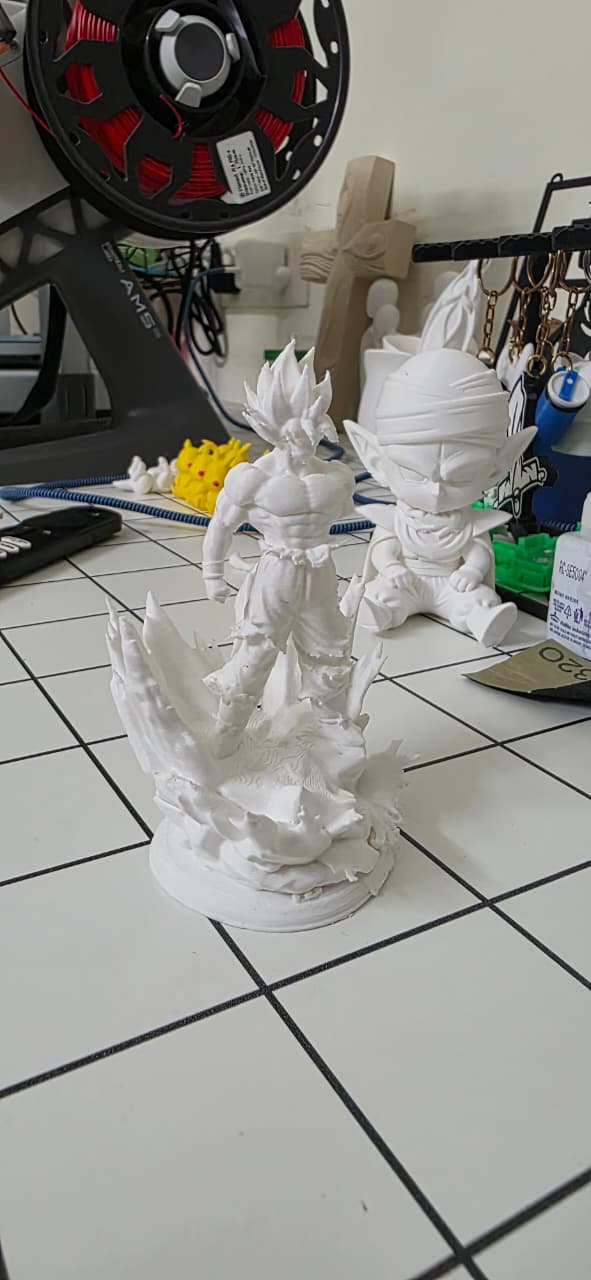
I run a small 3D printing studio on the side — multi-color FDM, a catalog of 101 SKUs. A failed print is a usability test you can hold.
THE ROOM
I teach the Claude × Figma loop live — components, variants, dark mode, generated on stage, failure modes included.
THE CITY
Hyderabad. Works everywhere. The time zone is a feature: my evening overlaps with everyone's morning somewhere.
THE DESK
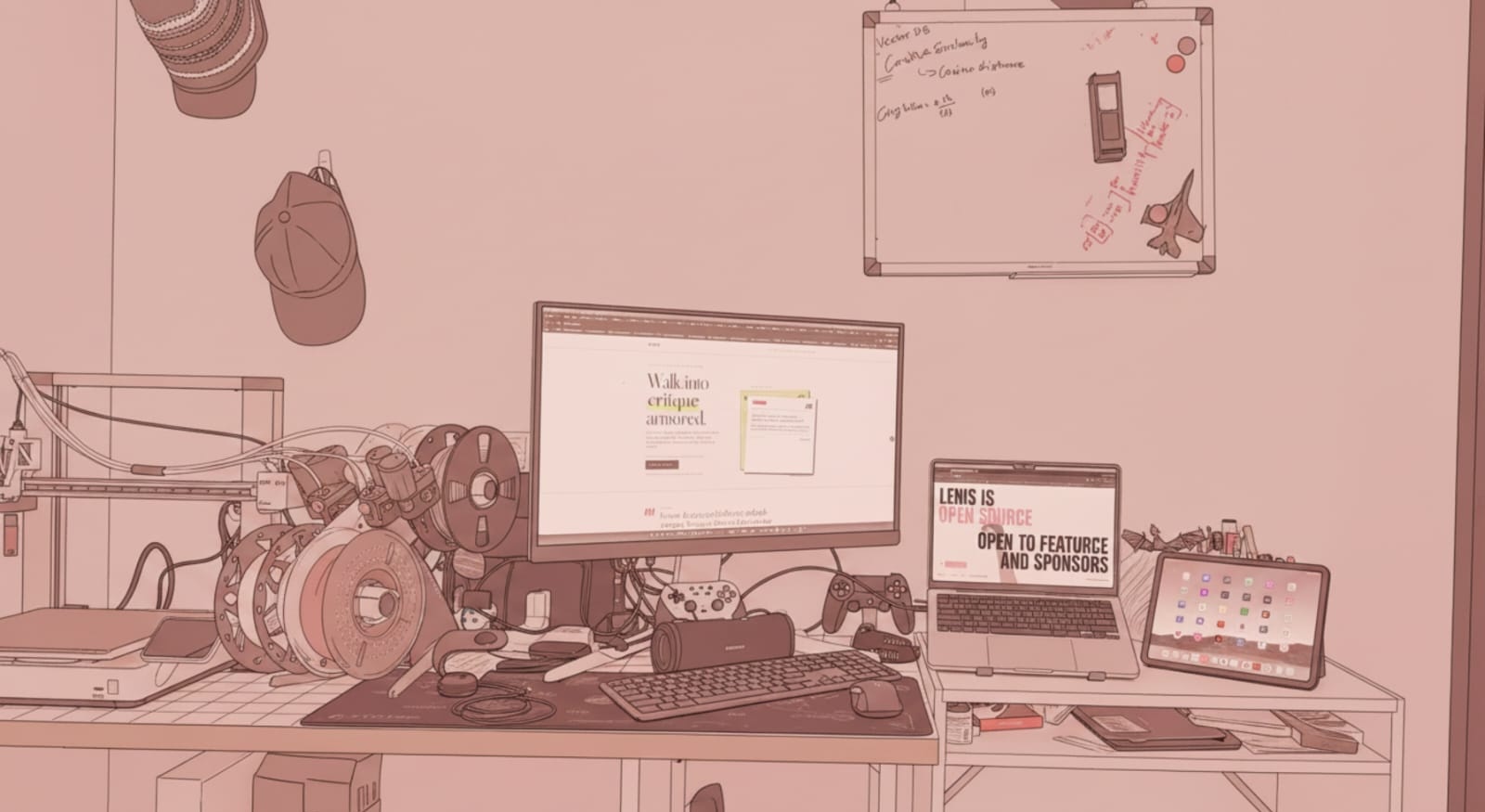
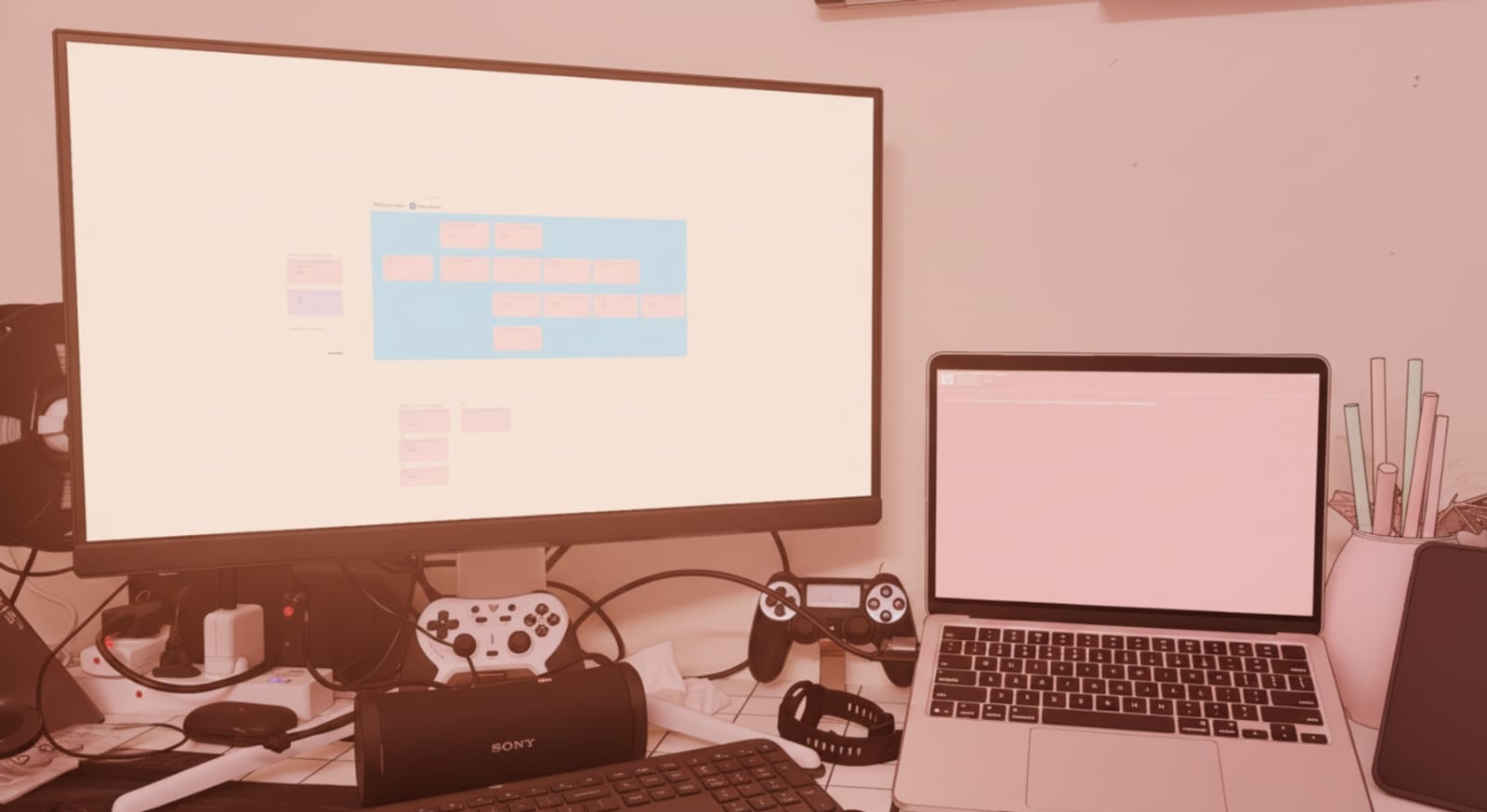
Figma and a terminal, side by side. The gap between them is where I work.
THE METHOD
This site was built by directing AI agents against written specs. Sixteen prompts, two cuts, one film. Receipts in Chapter 4.
I’m Sahil Mathew — Staff Product Designer & Design Lead at Alshaya Group, Anthropic-certified in the Claude API and Claude Code, building products on my own stack nights and weekends. I’m interested in staff-and-above design roles, AI-native product work, and conversations with people building in this direction. The door is open.